Meet the Women Protecting
Southern Africa's Ecosystems.
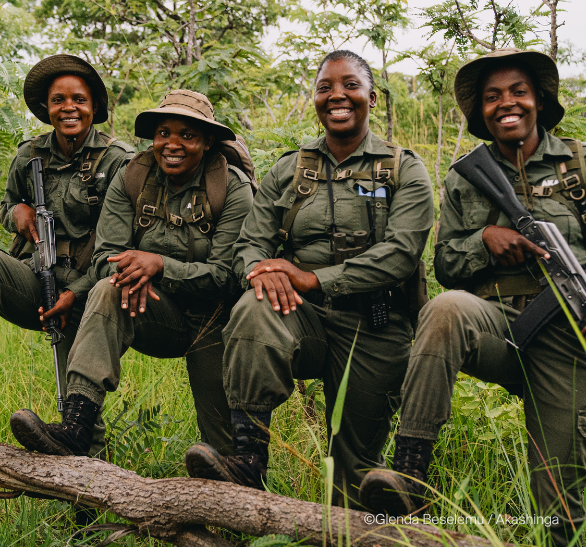
Akashinga fields the world's first armed, women-led anti-poaching unit — a programme that has redefined how ecosystems are protected and how conservation economics work for local communities.
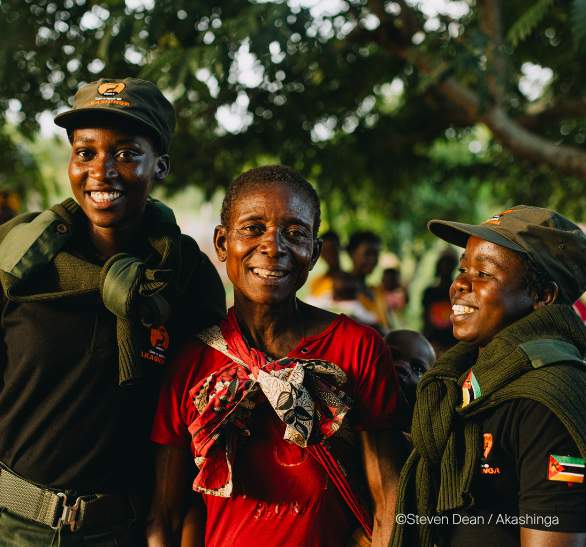
Change is most durable when it's community-partnered. And who better to lead change within a community than the women raised in it.
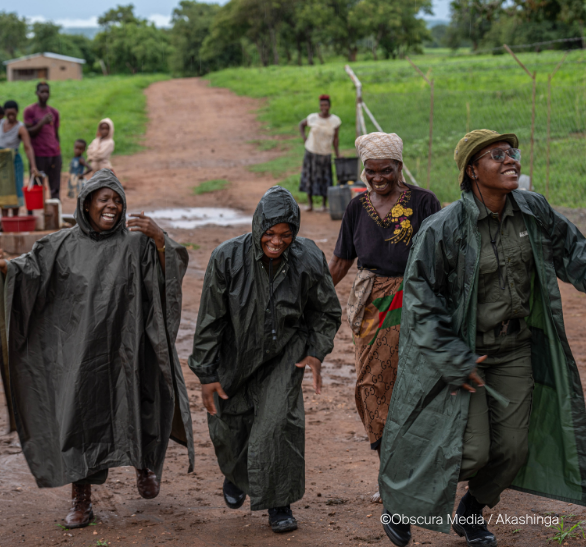
Being an Akashinga Ranger extends well beyond wildlife protection. These women are generating income, building green economies with outcomes that carry across generations. Many are purchasing property, building homes, sending their children to school full time, obtaining driver's licenses, enrolling in college, and finishing degrees.
This is what conservation looks like when the community is the strategy.

"The community used to doubt that women could do this work. Now they see the wildlife returning. Now they see what’s possible."
— Tracy Basarokwe, Akashinga Ranger

The Akashinga programme didn't begin with certainty. It began with 16 women from a rural Zimbabwe community, a training course modelled on special forces standards, and a question no one could yet answer.
The results surprised everyone.
Watch the National Geographic film below to see what happened next.

Across Southern Africa, ecosystems face sustained pressure from poaching, and conventional enforcement alone hasn't stopped it. The missing variable wasn't firepower. It was community.
The Akashinga Ranger programme was founded in Zimbabwe's Zambezi Valley in 2017 on a straightforward premise: recruit women from the communities living alongside these habitats, train them to special forces standards, and give them the authority and economic stake to protect the ecosystems on their doorstep.
When communities have a direct stake in conservation outcomes, poaching declines. The Akashinga Rangers' track record across Zimbabwe and Mozambique bears this out.
Akashinga: The Brave Ones, directed by Maria Wilehm and executive produced by three-time Academy Award winner James Cameron, follows the programme from its earliest days of training through its impact on rangers, communities, and the ecosystems they protect.
Women's Leadership in Conservation.
Akashinga's approach represents a genuine departure from how conservation has historically been structured across the continent. For decades, the dominant model relied on armed, militarised enforcement — an approach that often positioned local communities as threats to be managed rather than partners in protection. Women, where they appeared at all, were confined to supporting roles. Operational command remained elsewhere.
Akashinga was built on a different read of the problem. Poaching doesn't persist because communities lack policing. It persists where communities lack alternatives. Address the economics, and the incentive structure shifts. The question was who was best placed to do that, and the answer, it turned out, was the women already embedded in those communities, who understood the social fabric, held relationships across generations, and had the most to gain from stable, protected ecosystems producing long-term conservation economies.
That premise has been tested in the field across Zimbabwe and Mozambique. Akashinga Rangers are not auxiliaries. They hold full operational responsibility: anti-poaching patrols, community engagement, wildlife monitoring, and the kind of sustained presence that builds trust across years rather than deployments. The results are documented: poaching declines, wildlife returns, and the communities surrounding protected habitats shift from economic pressure points into active stakeholders in conservation outcomes.
The programme is scaling to reflect what the evidence supports. Akashinga aims to employ over 1,000 women as Akashinga Rangers, with a total workforce exceeding 3,000 across conservation areas in Zimbabwe and Mozambique, accompanied by measurable gains in education, economic development, and community health in the areas where rangers are deployed.
The evidence is straightforward: when women lead conservation efforts in the communities where they were raised, outcomes improve, for ecosystems and for the people who depend on them. Akashinga isn't the first organisation to recognise the potential of women in conservation. It is building the infrastructure to prove it at scale, and to make the case, with data, that community-driven conservation led by women is not an experiment. It is a replicable model.