

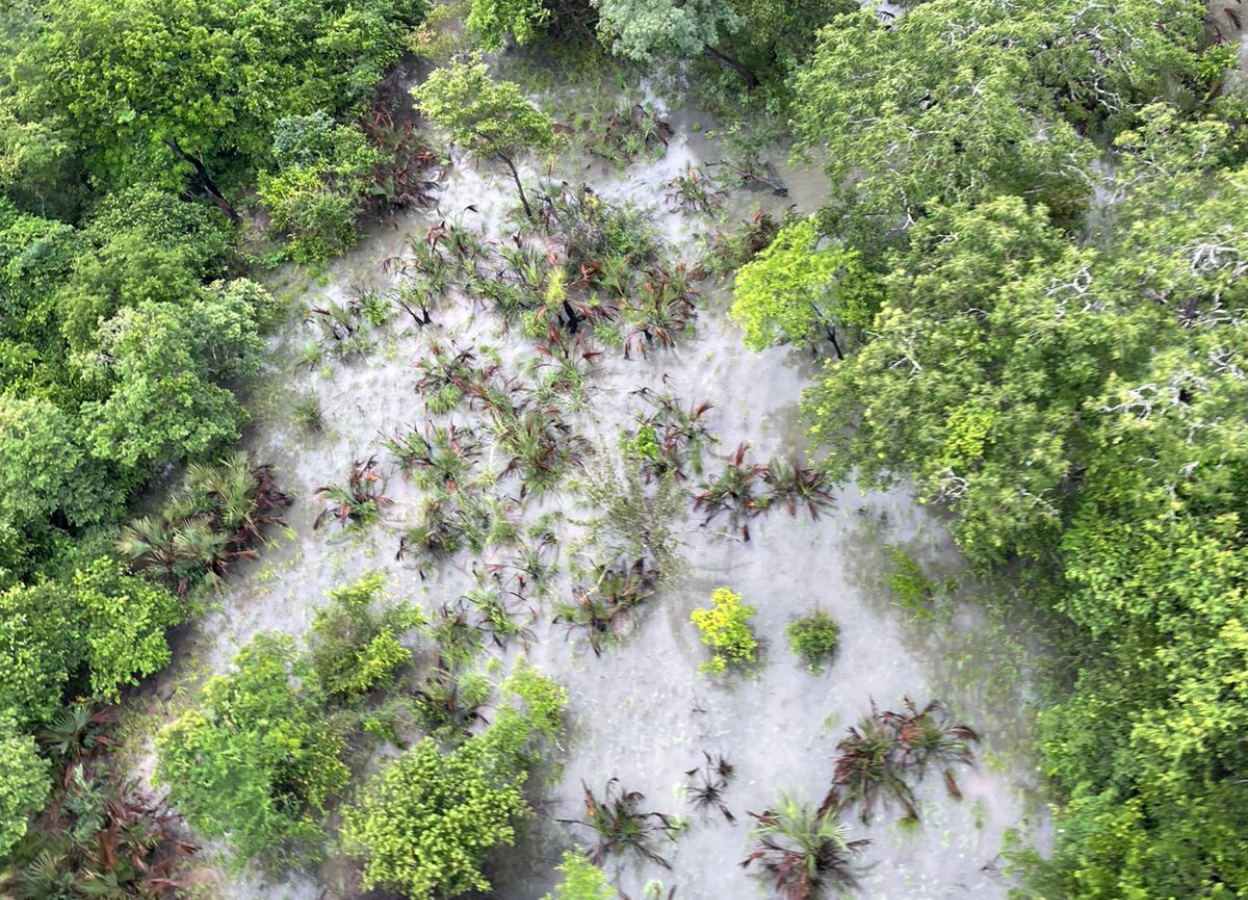
[Mozambique — January 2026] — Southern Mozambique is experiencing extreme flooding following weeks of unrelenting rainfall far beyond seasonal norms. Rivers have overflowed, roads have been cut off, and large areas remain inaccessible. Akashinga is currently in active disaster response mode, prioritising ranger safety, community relief, and continuity of conservation operations.
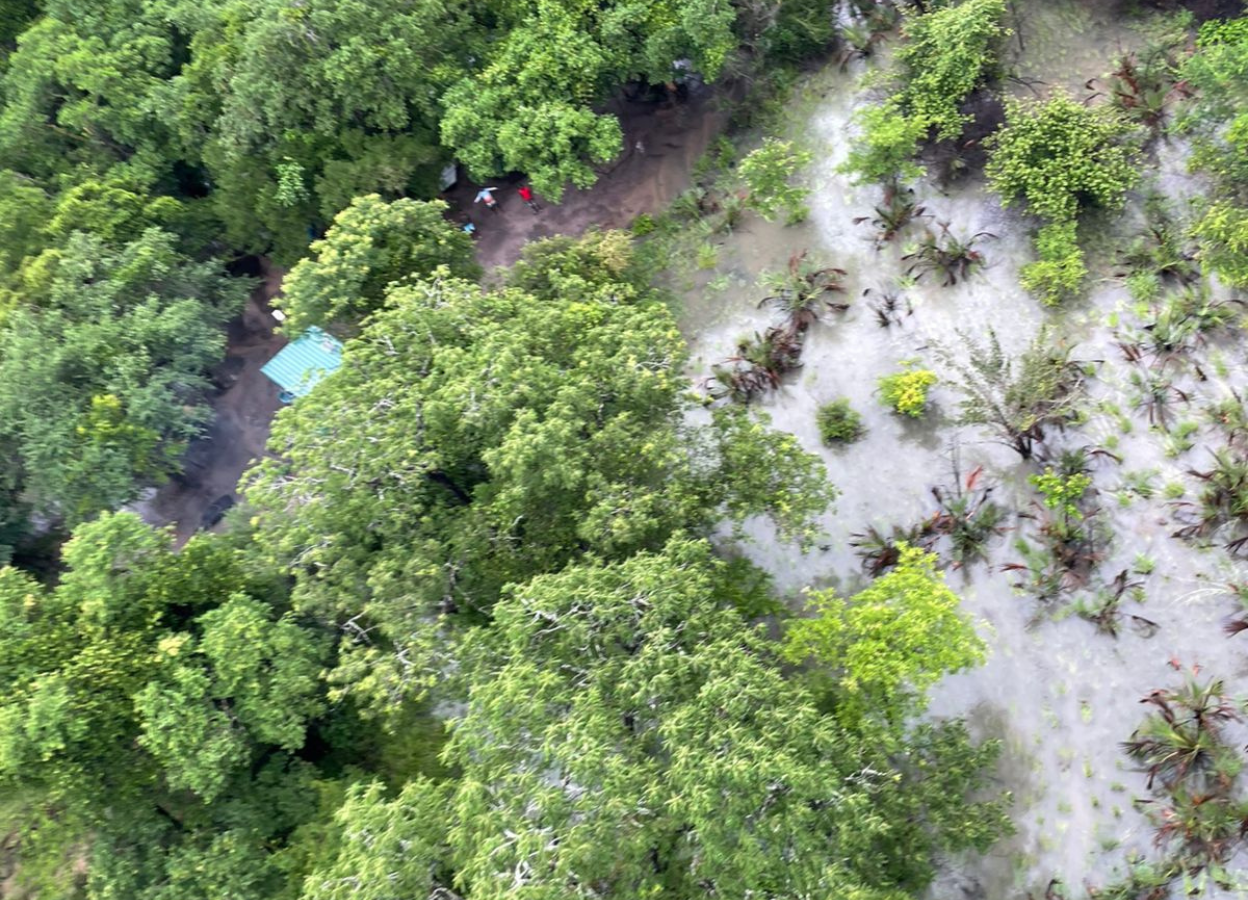
On 11 January, in the Coutada 5 area protected by Akashinga, Nyala Outpost was inundated as floodwaters surged through the area, cutting off communications. One Akashinga Ranger walked 5 kilometres through waist-deep floodwater to reach mobile signal and alert the operations team. Water levels around the outpost had risen to chest height.
Within hours, Akashinga chartered a helicopter to evacuate rangers from Nyala, ensuring no lives were lost.
The following day, teams reached Save Camp, where nine staff members were found with only one day of dry rations remaining as floodwaters continued to rise. They were evacuated immediately.
Meanwhile, flooding cut the national highway (EN1) near Akashinga’s Mozambique headquarters. During emergency efforts to assist displaced community members, a Toyota Hilux and a tractor were submerged. Both have since been recovered and remain operational, though water damage is already evident. The tractor is a critical asset for field patrols, logistics, and ongoing emergency response.
Communities Displaced, Emergency Relief Underway
Local communities have been severely impacted. In a village near Akashinga’s headquarters, nearly 90% of residents fled to higher ground, as floodwaters destroyed or contaminated household food supplies.
In response, Akashinga has already distributed emergency food kits to 190 families, providing up to two weeks of sustenance. Additional food and clean-water distributions may be required in the coming days and weeks as conditions evolve.
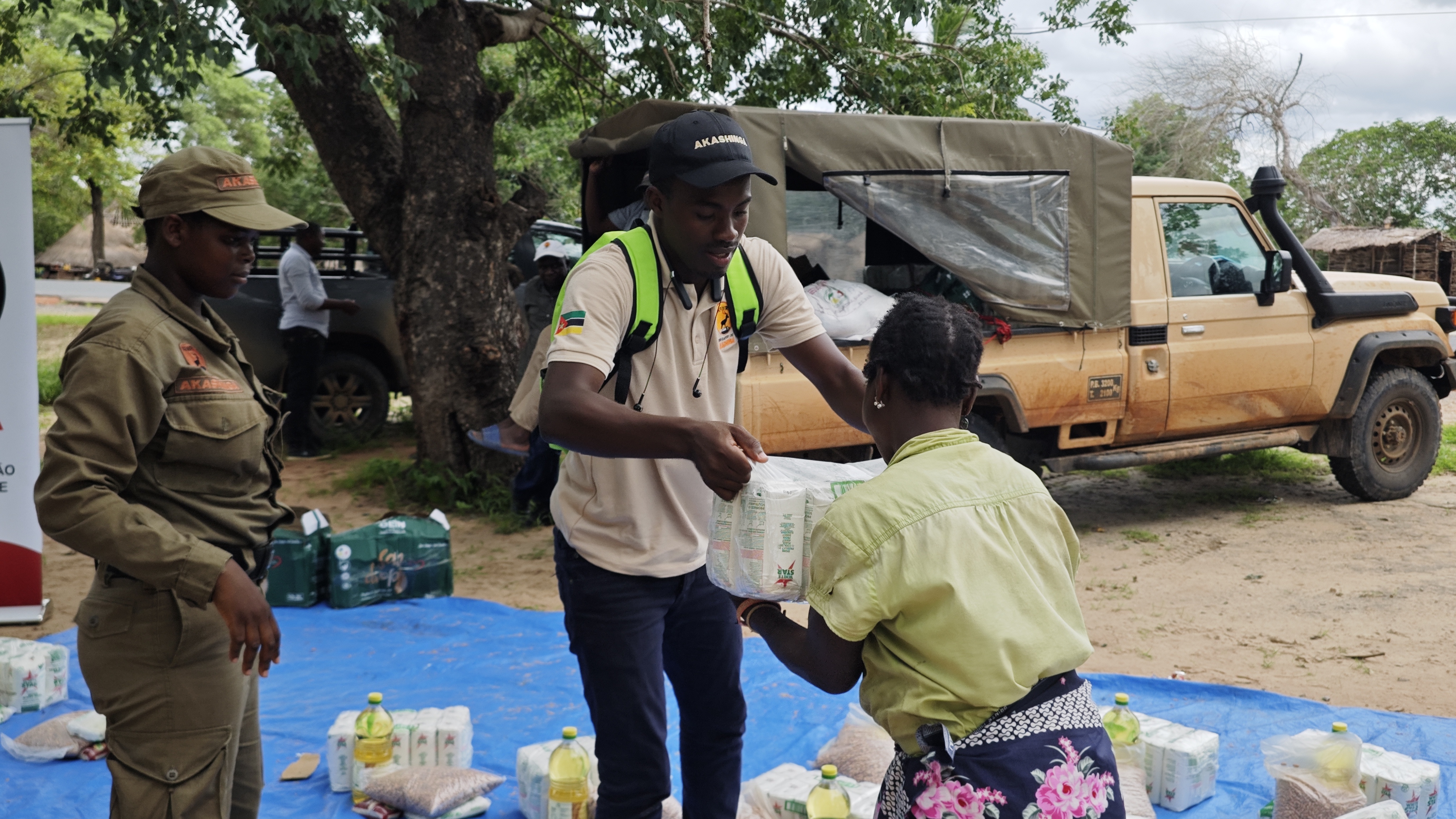
“Our priority is protecting people, both our teams and the communities we serve,” said Akashinga leadership. “But floods of this scale also threaten wildlife, habitat integrity, and long-term ecosystem recovery.”
Long-Term Risks for Wildlife and Ecosystems
Akashinga’s Director of Science, Dr. Byron du Preez, warns that flooding on this scale has lasting consequences:
"Floods of rare historical magnitude, such as we are currently experiencing, are catastrophic to ecosystems and the people and wildlife that depend on them. Rebuilding is expensive, regrowing is extensive, and it will be some time yet before the ripples of the water are no longer felt."
Full ecological and operational damage assessments are still underway across the landscape.
How Akashinga Is Responding Now
Akashinga’s emergency response currently includes:
- Rescue and evacuation operations, including helicopter airlifts
- Emergency food and clean-water relief for displaced families
- Temporary shelter support, including tarpaulins and tents
- Restoration of flood-damaged vehicles and field equipment
- Deployment of emergency communication devices to keep ranger teams connected in high-risk conditions
These efforts ensure that staff welfare and community support continue despite extreme conditions.
Support the Emergency Response
Akashinga is seeking urgent support to sustain ongoing disaster response efforts and protect frontline teams, communities, and ecosystems. The organisation is also seeking a match donor to double the impact of funds raised over the next two weeks.


