

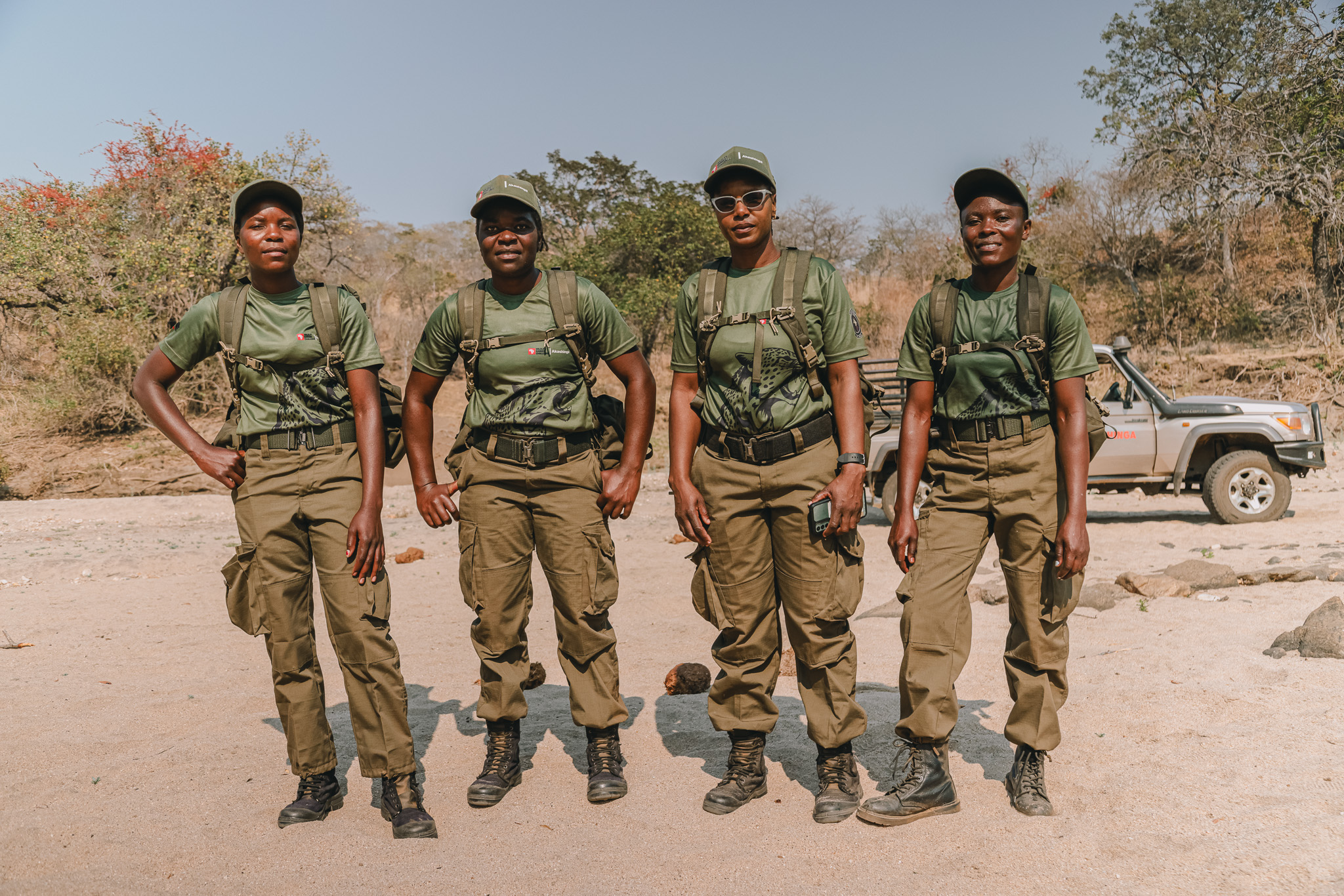
The Akashinga Ranger Report is a quarterly set of stories that puts you behind-the-scenes with the Akashinga Rangers. You'll be immersed in the rangers’ activities, experiences, stories, and achievements as they protect, connect, and restore invaluable ecosystems across Southern Africa.
Support ranger-led conservation that is built to endure. Give monthly, or make a one-time contribution to sustain the teams, systems, and ecosystems behind this work.
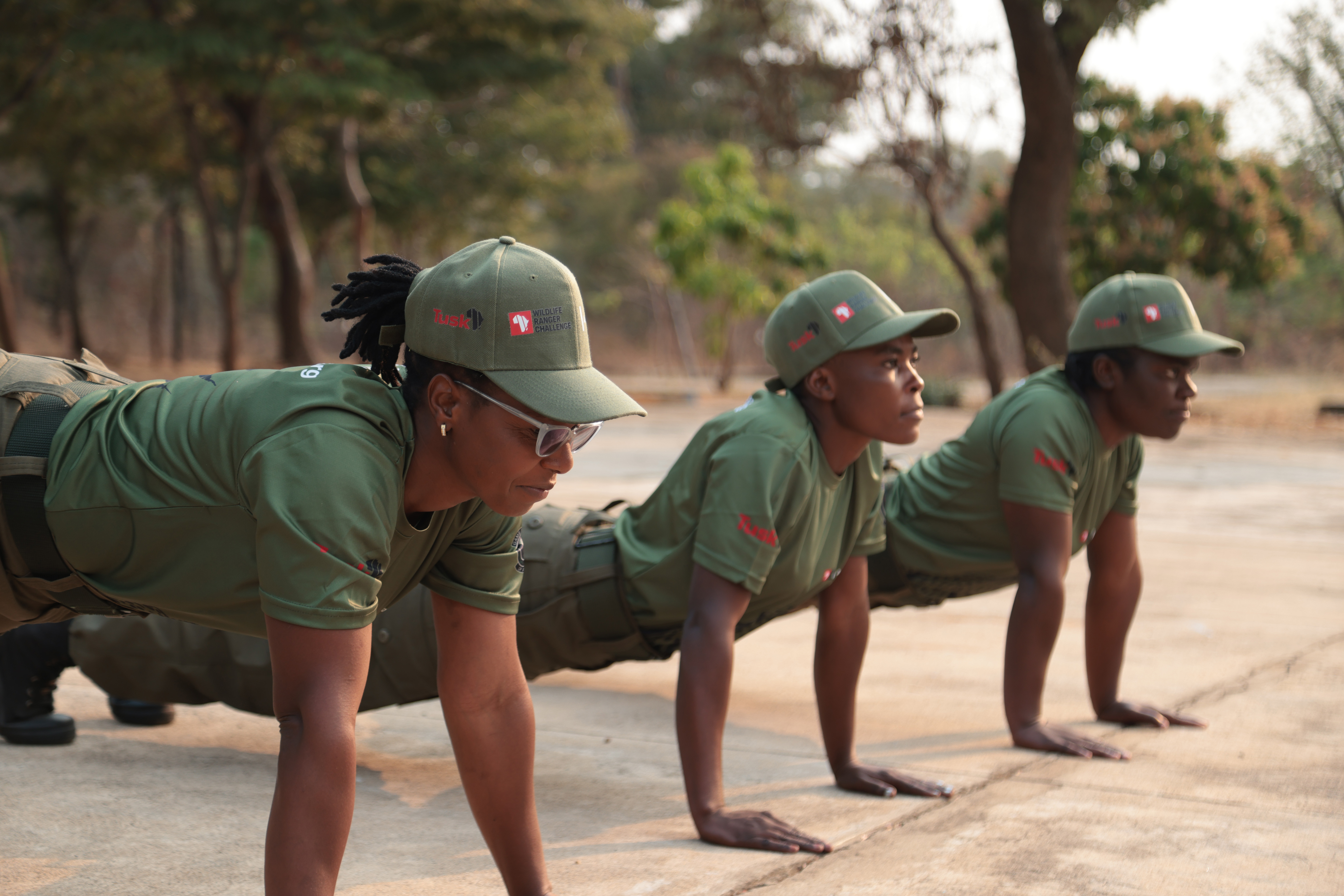
From Push-Ups to 21km: Akashinga Rangers Take on the Wildlife Ranger Challenge
Different reserves, different terrain, one shared calling. When Akashinga Rangers from both Zimbabwe and Mozambique took on this year's Wildlife Ranger Challenge (WRC), organised by Tusk and the Game Rangers' Association of Africa, they carried the pride of their teams and of the places they protect.
Over several months, from the online quiz through push-ups, sit-ups, and the 21km Race Day challenges, our teams from Phundundu, Songo, and Coutada 5 competed alongside more than 170 teams from 24 African countries.
For Songo Ranger Sharon Muwunganirwa, the challenge is a natural extension of her daily work. "What we do in our daily work is similar to the Wildlife Ranger Challenge, and I would like to participate again next year," she said. Her Songo teammate Chitekhiwe Munsaka, meanwhile, entered to represent Akashinga and to show the strength and dedication of the women who protect both wildlife and their communities.
Their preparation paid off. Thanks to constant training across our reserves, the rangers performed exceptionally well, with the Phundundu team placing second in both the push-up and sit-up challenges and the Songo team finishing third in the sit-ups.
For Fungisai Hangaranga, an Akashinga Ranger and Team Lead at Phundundu who has taken part several times, the result made this year stand out. "I have been participating in the Wildlife Ranger Challenge for the past couple of years. However, this year I am especially happy to have participated, because we came in second place in both the push-up challenge and the sit-up challenge," she said.
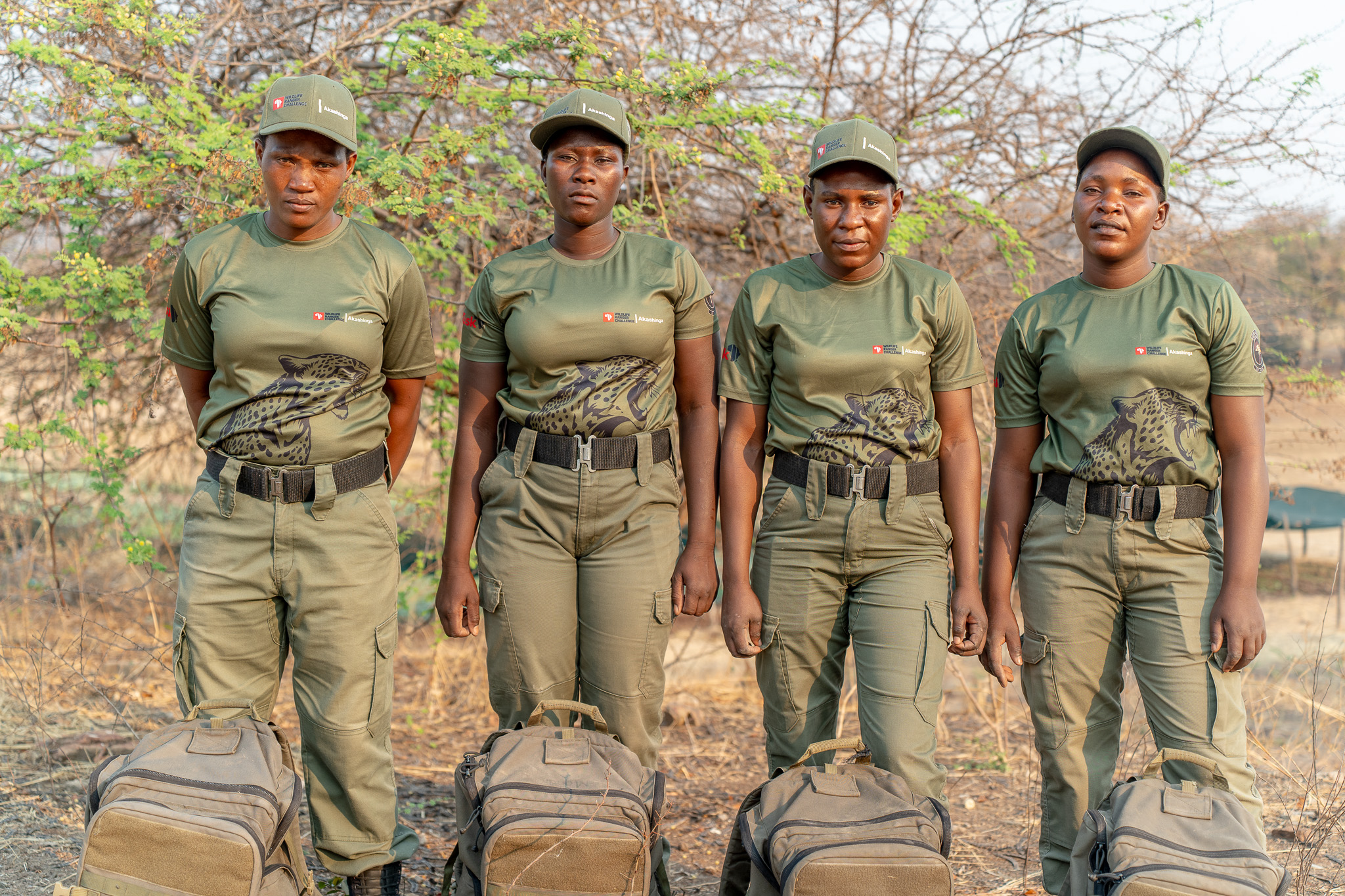
But it was the 21km Race Day on 19 September that proved the biggest highlight. Rangers from all three teams ran the half marathon in full kit on the same day as other teams across the continent. Colleagues and staff came out to cheer them on, and for many rangers, that support carried them through. "We received so much support from our colleagues today that it made us keep running the race," said Phundundu Ranger Ruvarashe Mashizha.
Her teammate Batsirai Chabikwa described the same determination. "My proudest moment was pushing through the race even when I felt like giving up. I told myself that together, with my team members, we can go far," she said.
Showing up on that start line says a great deal about who our rangers are. The months of training, the discipline, and the miles run are the same work they do on patrol, in the same places, for the same reason.
For Angela Kapoko, that is what made the day. "This year has been very special. We had so much support and teamwork from our colleagues, and it's what made us want to keep coming back. It's also been such an exciting turnout, with Akashinga Songo, Phundundu, and Mozambique all taking part in the challenge together," she said.
Akashinga Completes First IMET Assessments
In September, Akashinga completed our first Integrated Management Effectiveness Tool (IMET) assessments at our Phundundu Reserve in Zimbabwe and Coutada 5 in Mozambique. The assessments doubled as hands-on coach training for our staff.
IMET is a tool, delivered as software, whose methodology is based on IUCN/WCPA guidance. It was developed under BIOPAMA, a programme of the European Union and the Organisation of African, Caribbean, and Pacific States, with IUCN. Its methodology follows the IUCN/WCPA framework for protected area management effectiveness, which looks at a protected area across six linked elements: the context it operates in, how it is planned, the inputs it has in people, money and equipment, the processes it runs, the outputs it delivers, and the outcomes it achieves for wildlife, habitat, and people.
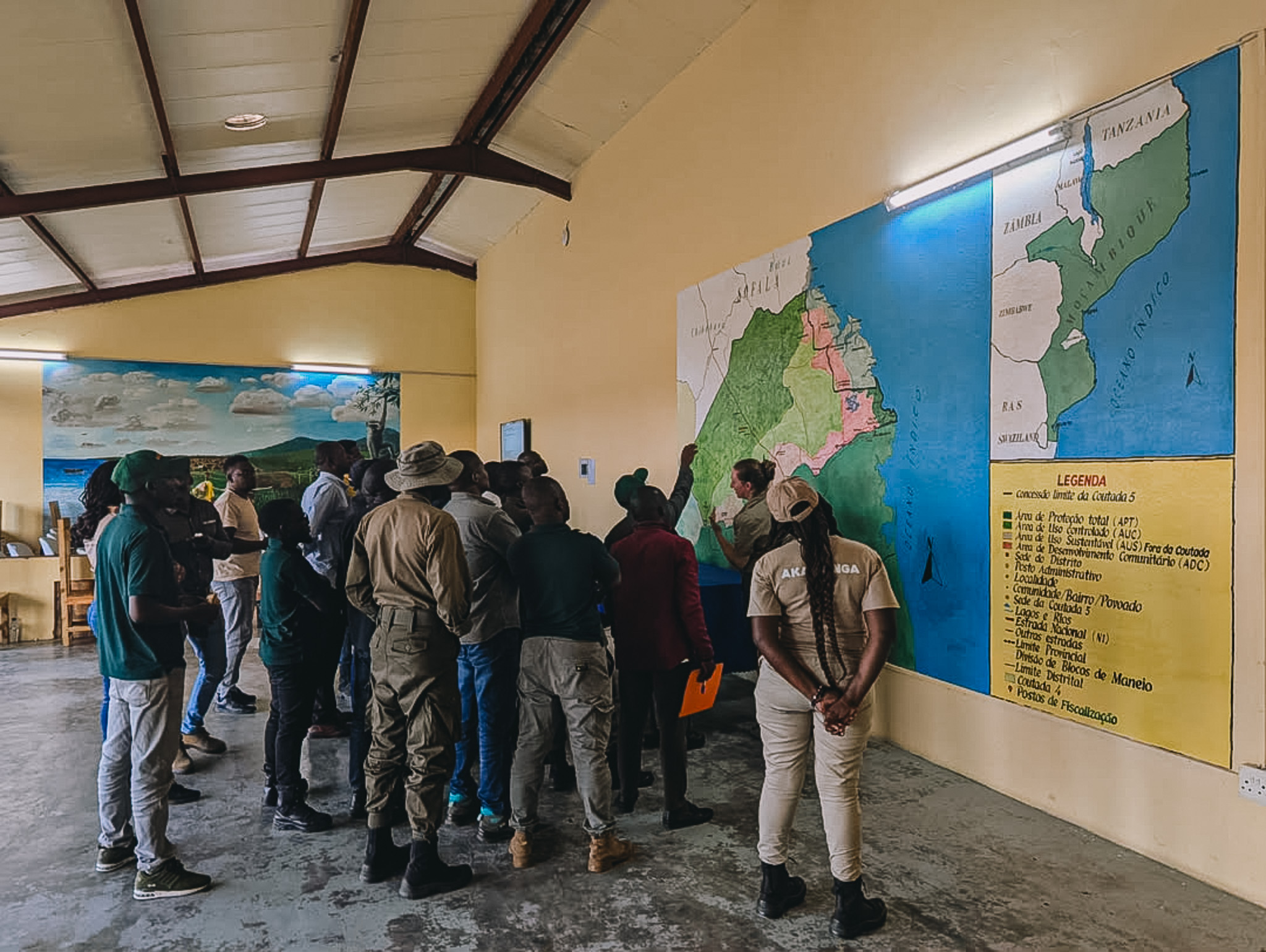
In an IMET assessment, a trained coach guides a workshop where staff, government partners, and community representatives score each element together, against evidence, rather than one manager filling in a form alone. The software turns those scores into a clear picture of where a protected area is strong, where it is weak, and what to prioritise. Because the same framework is used widely across African protected areas, it lets us measure ourselves against a recognised standard, and repeat the assessment each year to see whether we are improving.
Why does this matter? Patrol hours, arrests, and snares removed tell us how busy we are. They do not always tell us whether the ecosystem is better protected than it was a year ago. IMET asks that harder question, and it asks it of the whole management system, not only the ranger teams.
Two Sites, Two Assessments
Both assessments were led by coach-trainer Paula Vrdoljak of Tulukani.
At Phundundu, the workshop ran from 1 to 3 September with about two dozen participants. They included our staff, Hurungwe Rural District Council, ZimParks, the Forestry Commission, neighbouring community representatives, and other stakeholders.
At Coutada 5, about 40 people gathered at our N'Dzinda headquarters in mid-September. They included our staff from every department, district government representatives, and community-based natural resource management representatives.
Why We Did It
The programme had two goals. The first was to set an honest baseline of management effectiveness for each site, showing where it is strong, where the gaps are, and what to prioritise next. The second was to build our in-house IMET coaching capacity, so we can support partner organisations and other grassroots organisations that share our values as we grow our capacity for conservation impact.
Both sites performed well for a first assessment, and the same priorities emerged at each: finalising management plans, strengthening monitoring and information systems, and turning data into decisions. The assessments also give us a baseline to measure future progress against.
Building Coaching Capacity
Four of our staff trained as coaches under Paula: Dr Ranga Huruba (Zimbabwe Country Manager), Ashrah Shereni (Biodiversity Officer, Zimbabwe), Tiago Lidimba (Coutada 5 Project Manager), and Bastiaan Boon (Director of Operations). They will qualify once their Coutada 5 reports, which they led themselves under supervision, have been assessed.
"I am incredibly excited about this tool. It gives us an honest picture of where we are strong and where we need to do better, and it lets us show, not just say, that what we do is working. That matters for us, and it matters for every partner we can bring along with us," said Bastiaan. He sees it helping us support other organisations doing the same work under our umbrella, and giving staff the chance to upskill through participation and coaching.
For Ranga, who helped assess our own operations while learning to facilitate, the strength of IMET is that it demands results. "You can't hide behind activity. The tool keeps asking whether what we do is actually changing outcomes on the ground. I came away with real respect for the method and genuine excitement about having this capacity in-house," he said.
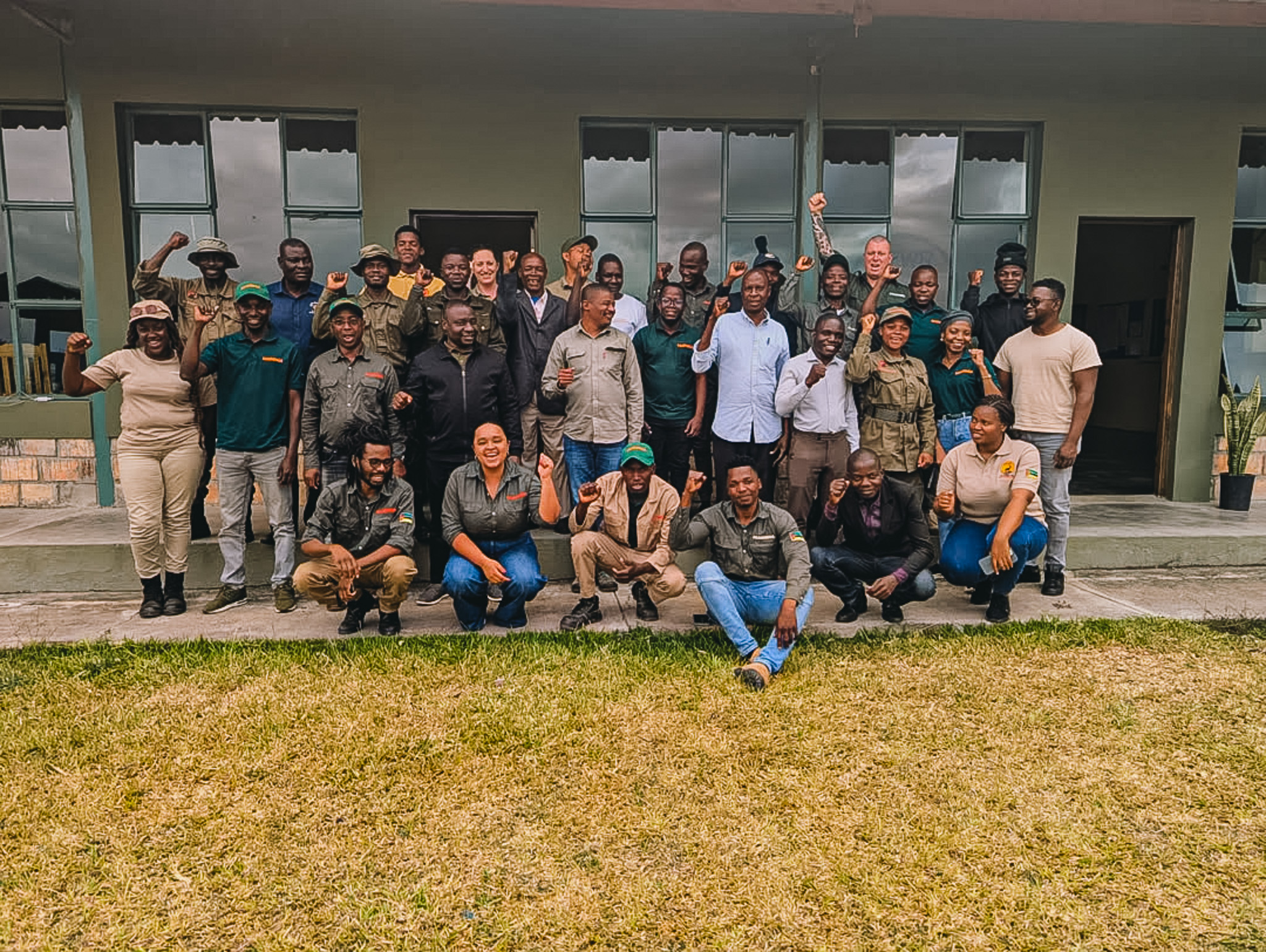
What stayed with him most was the room itself, where rangers, managers, government officers, and community members scored the same questions together and, more often than not, reached the same honest conclusions.
What's Next
Our new coaches will gain further experience under more advanced practitioners. Songo's first assessment is planned for the first quarter of 2027, using 2026 as its base year, alongside a follow-up at Coutada 5. We also hope to bring the tool to partner organisations in and around the regions where we operate.
"The opportunity now is to move from monitoring our activities to measuring our impact," said Ranga.
Once I Started, I Saw It Was Possible: Fungisai Hangaranga
Meet Fungisai Hangaranga, an Akashinga Ranger and Team Lead at Phundundu, who has been protecting wildlife with us since 2021.

Together with four of her team members, she took part in this year's Wildlife Ranger Challenge. For Fungisai, the push-up challenge was as much a mental test as a physical one. "It was somehow challenging, but I liked it because it made me fit," she says. "When I was doing the challenge, I was doubting myself, wondering if I would complete it. But once I started, I saw that it was possible."
That same resilience defines her everyday work in conservation. Fungisai is quick to point out that the Wildlife Ranger Challenge isn't far removed from the job itself. "What we often do in the field is not different from what is done during the Ranger Challenge," she explains. "There's a lot that people don't know about the work we do. The job is more than just wearing the gear and patrolling."
Off duty, Fungisai channels that same energy onto the netball court, a sport she has loved since childhood. She plays centre, wing attack, and goal defence, and moves between them the way she moves between the demands of a patrol day.
It's a job she is proud of, and one that keeps her strong. "What I like about my job is the physical work we do, which helps me maintain a healthy body and a healthy lifestyle," she says.
Our rangers do this work every day, in the ecosystems we protect. Your gift keeps them on patrol: Support the Akashinga Rangers.


