

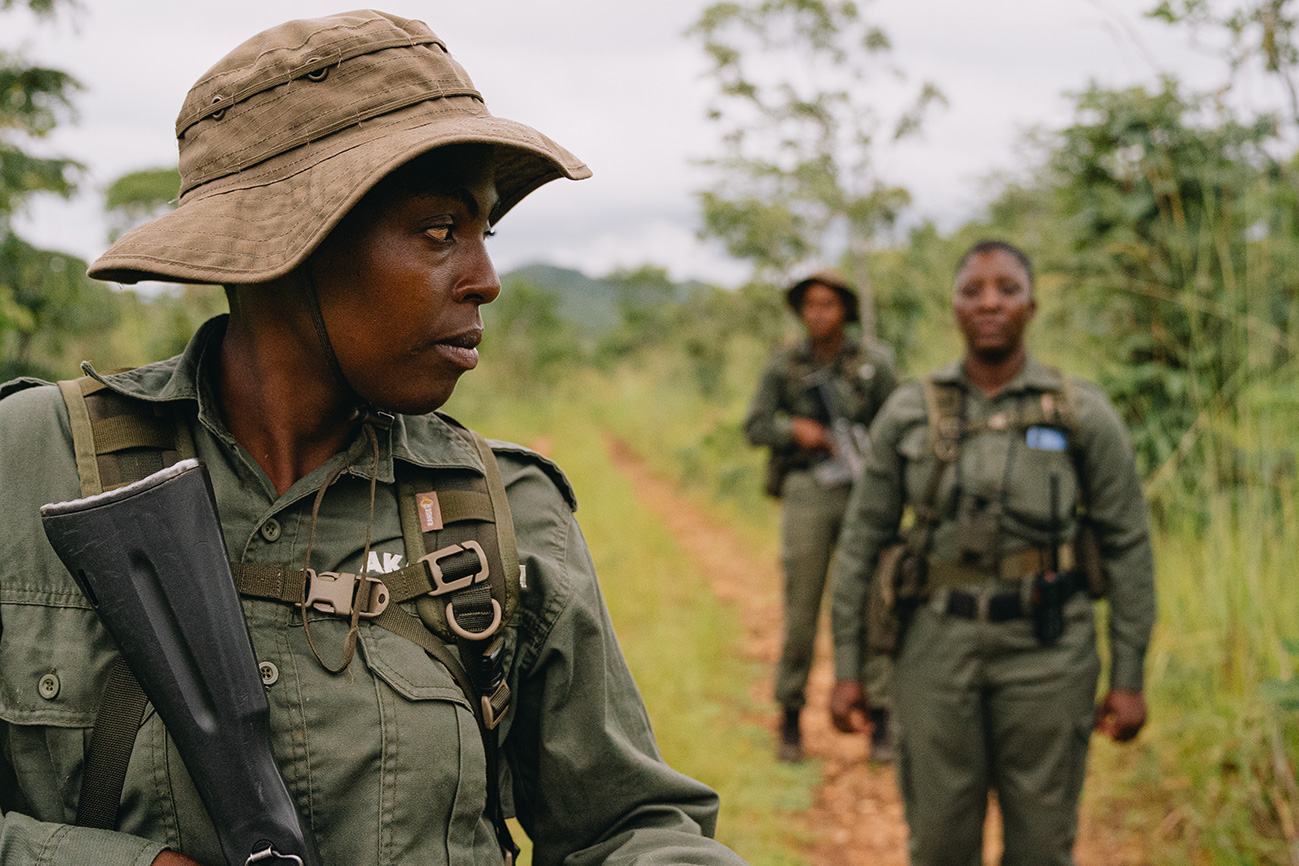
The path through Phundundu moves through dense riverine thicket before it opens into grassland — terrain that holds one of Zimbabwe's most important concentrations of wildlife. Tracy Basarokwe knows it the way most people know their own neighbourhood: by feel, by sound, by the things that don't belong.
She has been walking it for years. Not because today is significant. Because yesterday was, and tomorrow will be.
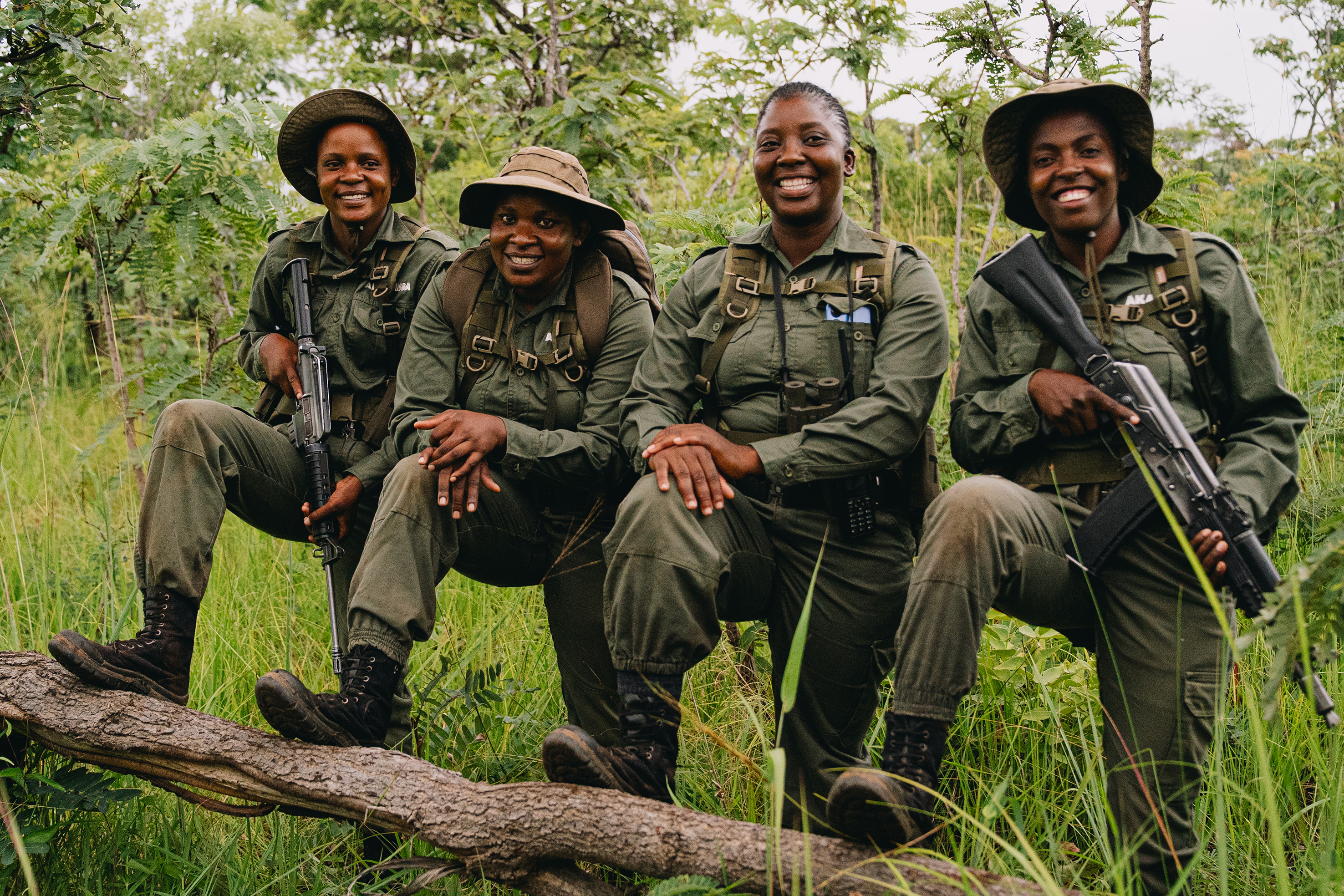
On a recent patrol, Tracy moves at the front of her team: four Akashinga Rangers in formation, rifles slung, eyes tracking the edges of the habitat. She doesn't need to be told where to look. She's already looking.
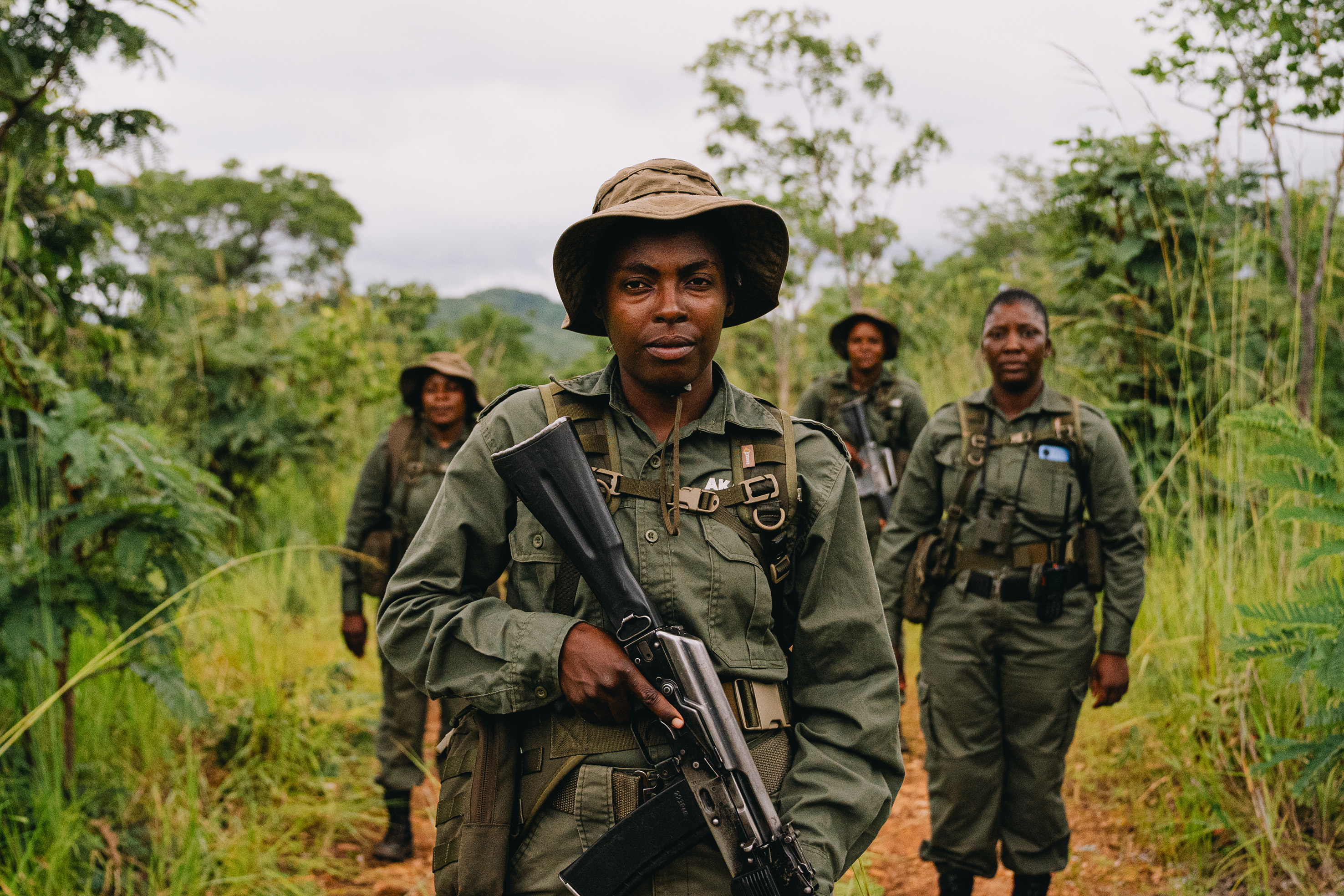
“The community used to doubt that women could do this work. Now they see the wildlife. They see what’s possible.”
Tracy was among the first 16 women to join Akashinga. Her father encouraged her to try. She made it through selection. She earned her place. And in the years since, she has watched something shift, not just in the protected habitat she patrols, but in the communities surrounding it.
Where there was once doubt, there is now recognition. Where there was once poaching pressure, there is now recovering wildlife. The two things, she will tell you, are not unrelated.
A System Built for Consistency
Earth Day themes come and go. The ecosystems don't.
This year, much of the world is focused on defending what exists: environmental protections, clean air standards, the systems communities have spent generations building. It is necessary work. But in Phundundu — and across the 13.1 million acres Akashinga supports across Zimbabwe, Mozambique, Botswana, and Namibia — protection has never been contingent on a political moment or a global campaign.
Rangers patrol. Teams monitor ecosystems. Communities help drive conservation on the ground.
Not because conditions are perfect, but because the work must continue regardless.
That consistency is what makes it effective. Conservation built on daily presence — intelligence-led operations, community investment, long-term ecological monitoring — produces results that a single day of awareness cannot. Wildlife populations stabilising and recovering. Poaching incidents declining. Communities more directly and substantively involved in conservation leadership.
Protection has never depended on a political moment. It happens every day, in the same landscapes, with the same commitment, whether or not the world is paying attention.
Phundundu is one node in that system. So is every other protected habitat where Akashinga teams operate. The scale is significant, but it is built from the ground up: from patrol routes and ecosystem surveys and the accumulated knowledge of the women and conservation teams who know this habitat as intimately as Tracy Basarokwe knows Phundundu.
What Continuity Looks Like
Tracy has a six-year-old daughter. When she describes why this work matters beyond the immediate — beyond the patrol, beyond today's survey data — she talks about her. Her daughter has already told her that she, too, wants to be a ranger when she grows up.
Tracy recognises what that means: that the wildlife her team protects today will be there for the next generation to know. That the path her daughter will walk through Phundundu will be as full of life as the one her mother has spent years protecting.
That is the long arc of community-partnered conservation. Not a gesture toward the future, but the patient, daily construction of it.
Earth Day Is One Day
Akashinga is not asking you to be moved by a single day.
The rangers, the teams, the communities who lead this work: they will be in the field on April 23rd. And the day after that. The ecosystems they protect don't pause, and neither does the commitment required to protect them.
What makes this work endure is not inspiration. It's infrastructure: trained rangers, community investment, operational capacity, ecological knowledge built over years. That infrastructure requires sustained support to function.
Akashinga's model works because it is built to last. Not because conditions are ideal, but because the people, like Tracy, doing this work have decided they must.
Earth Day is a reminder. The work is every day. If you believe in long-term conservation that is built to endure, consider supporting Akashinga.
All photographs by Glenda Beselemu, taken in Phundundu Wildlife Area, Zimbabwe.


