

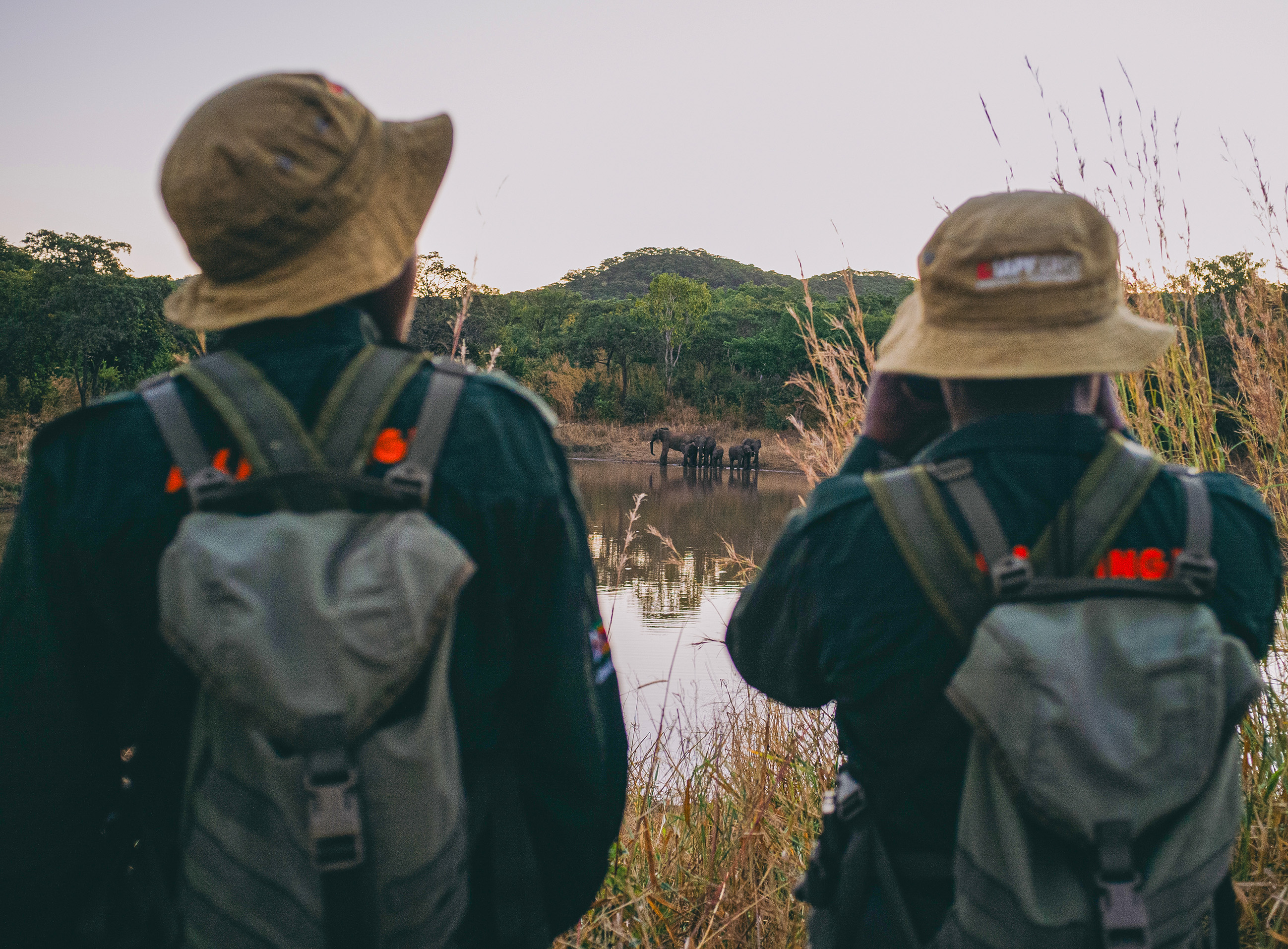
At a waterhole in Zimbabwe's Phundundu Wildlife Area, an elephant herd moves through the shallows at last light. Two Akashinga Rangers watch from the tree line, cataloguing the encounter the way they catalogue hundreds of others each season: not just as a sighting, but as data. Herd size. Behaviour. Time. Location.
.jpg)
When people picture endangered species, they tend to picture the animal itself: the elephant, the pangolin, the hornbill. What's harder to picture is the system the animal holds up.
Elephants make that system visible. They reshape the vegetation around them as they move, carry seeds across vast distances, and open up the kind of habitat that birds, insects, and smaller mammals depend on to survive. Remove that function from a landscape, and the effects don't stop with the elephant. They move outward, through the woodland, one dependency at a time.
Species loss isn't a single, dramatic collapse, but one thread pulled. Then another.
The Threads Already Fraying
In Zimbabwe, several of those threads are visibly under strain. Pangolins face mounting pressure from illegal wildlife trade. The Southern Ground Hornbill is declining, slowed by a low reproductive rate and a sensitivity to habitat change that gives it little room to adapt. The Miombo woodlands that underpin much of the region's ecosystems are under steady pressure from fuel wood extraction and habitat clearing.
None of these losses happen in isolation. Each is a signal, evidence of a wider system under pressure, not an isolated event.
.jpg)
Reading the Ground
Akashinga's response starts with watching closely, over time. Our conservation teams monitor long-term wildlife population trends through road traffic surveys, tracking how species and habitats shift season to season and year to year. It's the kind of pattern that only becomes visible with sustained, consistent presence.
Fire management plays the same role from a different angle. In Akashinga's Phundundu Reserve and in our Songo Reserve, where high fuel loads and dry-season conditions make uncontrolled fire a serious risk, good fire management helps maintain habitat diversity and supports healthier ecosystems for both wildlife and the people who live alongside it.
Both practices point to the same underlying idea: protecting a species means understanding the conditions that let it exist in the first place.
What It Actually Takes
This month's Endangered Species Day sharpened a question Akashinga returns to often: what does it actually take to protect a species?
The answer is collaboration: science and community working together. It isn't about fencing off protected habitat. It's about monitoring change carefully, working closely with the communities who live alongside wildlife every day, and understanding what each species does, so that its disappearance doesn't go unnoticed until it's already reshaped everything around it.
An elephant herd at a waterhole is a single sighting. Logged alongside thousands of others, across years, in the same protected habitat, it becomes something more: a record of whether the system is holding.
If you believe in conservation that looks at the whole ecosystem, not just the species in front of it, consider supporting Akashinga.


